
End-to-end, fully independent ODM R&D services
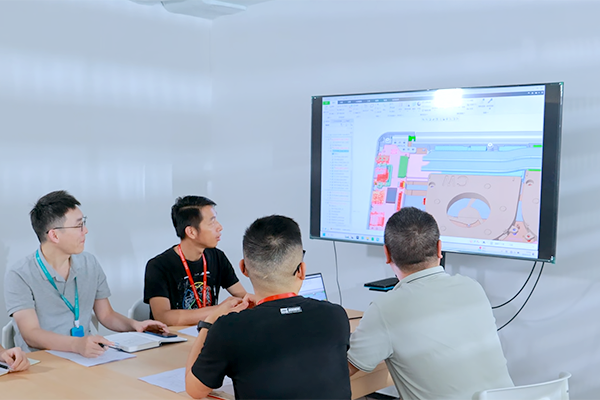
Professional R&D lab with a team of senior engineers ensuring full technology autonomy and control.
Built on our ownSolution Platform R&D CenterandStructural Industrial Design CenterAchieve full-chain in-house R&D—from low-level circuit design, PCB layout, and BOM development to complete product structural design and mold development—building a robust technological moat.
Full-stack in-house development · Full technical control
Deliver core technology independently without relying on third-party solutions. From circuit design to structural development, handle all stages in-house to ensure efficient project execution and consistent quality.
Multi-category coverage · Diverse scenarios
Covers ultrabooks, business laptops, AI PCs, Mini PCs, and all-in-one systems to meet the diverse needs of consumer and commercial markets across various scenarios.
Full ODM Services · Rapid Deployment
One-stop service from product concept definition and ID design to mass production. Efficiently supports customized development and standard private mold projects, accelerating time-to-market.
Motherboard Hardware and Software R&D
Leveraging our in-house professional hardware R&D team, we achieve full control over the entire product lifecycle—from schematic design and PCB layout to system integration and testing. Deeply optimized for mainstream Intel and AMD computing platforms, our solutions feature compact, high-density designs capable of rapidly addressing custom requirements. This provides a robust hardware foundation for superior performance and reliability.

Schematic and High-Speed PCB
Independently design multi-layer PCB layouts with deep optimization for signal integrity and EMC performance, supporting compact high-density designs to ensure a stable and reliable hardware foundation.
Power and Power Consumption Optimization
Custom high-efficiency power loops balance performance and battery life, ensuring stable operation across wide temperature ranges to meet demanding industrial requirements.
Hardware Interface Customization
Flexible expansion of industrial-grade ports including Ethernet, serial, and Thunderbolt to rapidly meet diverse requirements and precisely adapt to varied application scenarios.
BIOS Adaptation and BOM
Complete low-level BIOS adaptation and debugging; deliver an accurate BOM, optimize component selection and costs, and ensure a stable, controllable supply chain.
End-to-end debugging loop
Conduct in-house functional, power, and stability testing to quickly identify and resolve hardware issues, significantly shortening product iteration cycles and time-to-market.
Technology autonomy and controllability
Full-stack in-house development from underlying hardware to upper-layer adaptation not only enhances product customization capabilities but also ensures technical independence and secure, controllable supply chains.
Enclosure structural design
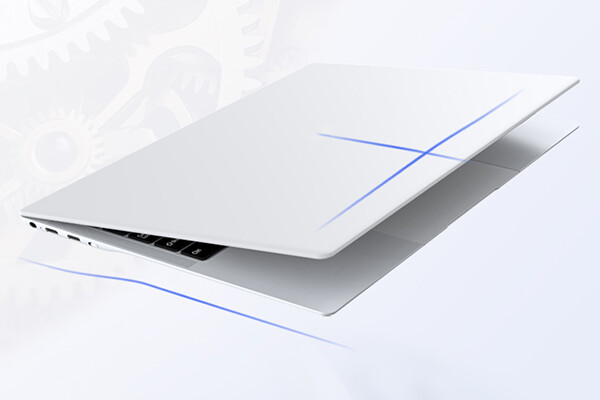
As the foundation of our private-model ODM capabilities, we offer full-stack in-house development—from device stacking and precision structural design to mass production validation. Our proprietary design approach enables ultra-slim, high-strength form factors while ensuring product reliability from the outset, guaranteeing manufacturability and cost efficiency.
Chassis stacking and modeling
Optimize internal layout and generate high-precision 3D structural drawings to achieve an ideal balance between ultra-slim design and structural strength.
Precision Enclosure Design
In-house developed A/B/C/D shell structure with precise hinge, latch, and gap alignment to ensure excellent grip feel and premium texture.
High-Efficiency Thermal Dissipation Development
Combine hardware power simulation to customize airflow, heat pipes, and fan solutions, effectively addressing device heating and noise issues while enhancing stability.
Mockup and Reliability Verification
Output functional prototypes for rigorous drop and hinge testing, and conduct early DFM analysis to ensure structural stability and reliability.
Design for Manufacturing: Structural Optimization
Optimize production yield from the design stage, simplify manufacturing processes, reduce costs, and ensure efficient, high-quality conversion of product designs into mass-produced units.
End-to-end pipeline from concept to mass production
The motherboard hardware and structural teams collaborate in parallel, executing the standard ODM development process. Through concurrent engineering, we compress the R&D cycle to ensure efficient, high-quality project delivery, achieving full-lifecycle closed-loop management from requirements analysis to mass production handover.
EVT Engineering Validation: Foundation for Function and Structure
Validate hardware functionality logic and structural stack feasibility, resolve foundational design bugs, complete the core feature loop, and establish the prototype foundation.
DVT Design Verification: Ensuring Reliability
Conduct comprehensive reliability testing—including thermal cycling, vibration, and aging—to validate performance in extreme environments and finalize the design for mass production.
DFM Optimization: Ensuring Mass Production Yield
Evaluate manufacturing process compatibility, optimize PCB layout and structural design to improve yield, reduce production costs, and ensure mass production efficiency.

End-to-end R&D closed-loop process
Professional laboratory ensures reliability
We operate a dedicated hardware and structural reliability lab to conduct comprehensive, rigorous testing before product launch. From core components to full-system performance, every stage is meticulously validated to ensure each unit delivered to users offers peak stability and durability.
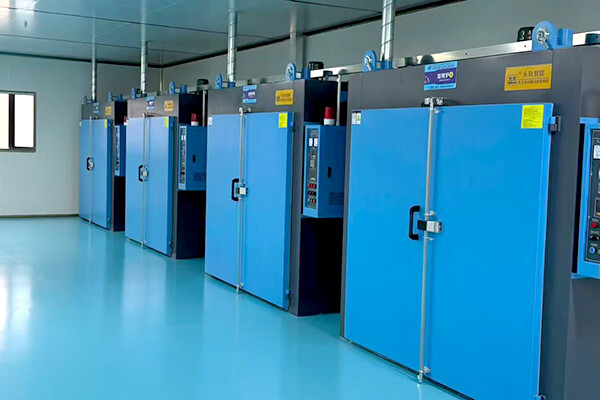
The laboratory is equipped with internationally standardized test equipment capable of simulating extreme conditions ranging from extreme cold to high temperatures. This ensures product stability across all operating scenarios, providing a solid scientific foundation for product quality.
Hardware Performance Stress Test
Covers motherboard power consumption, signal integrity, and EMC testing. Validates hardware stability and anti-interference capability under extreme conditions through thermal cycling and 7×24-hour aging burn-in.
Structural strength durability verification
Undergo drop, twist, crush, and hinge durability tests (exceeding 2 million cycles), plus shell abrasion testing. These simulate real-world impacts and wear to ensure a robust, long-lasting chassis.
End-to-End Comprehensive System Validation
Rigorous testing covers overall thermal efficiency, battery life, and connector durability (exceeding 5000 cycles) across all scenarios—from work to entertainment—ensuring no compromises and a consistently premium experience.
Deliver value to customers
Choose us for superior solutions and a reliable partner. We guarantee your business success across the entire value chain—from design to mass production delivery.
Core hardware and structure are kept in-house. We maintain full control over project documentation and iteration schedules, ensuring complete ownership of product definition and development.
Supports deep modification of motherboard circuits and shell design, offering highly customized private mold development services to perfectly fit your exclusive use cases.
Hardware and structure teams collaborate efficiently, significantly reducing cross-departmental communication costs and accelerating development cycles to seize market opportunities.
Introduce a pre-assessment mechanism for Design for Manufacturability (DFM) to identify and mitigate potential manufacturing risks at the design stage, ensuring high production yield while reducing scale-up risks and costs.
Enable rapid internal issue resolution during mass production, respond efficiently to market feedback, and continuously support feature upgrades and iterative optimization to maintain product competitiveness.